Oral Surgeon vs. Dentist: What's the Difference and When Do You Need One in Jackson, MS?
Understanding the difference between a general dentist and a specialist can help you make faster, more confident decisions about your dental care. Many patients in Jackson, MS, are unsure when their regular dentist is the right provider and when they need to see a specialist. This article explains the key training differences, the procedures only a specialist can perform, and the signs that a referral may be on the way.
Training: How an Oral Surgeon Differs From a General Dentist
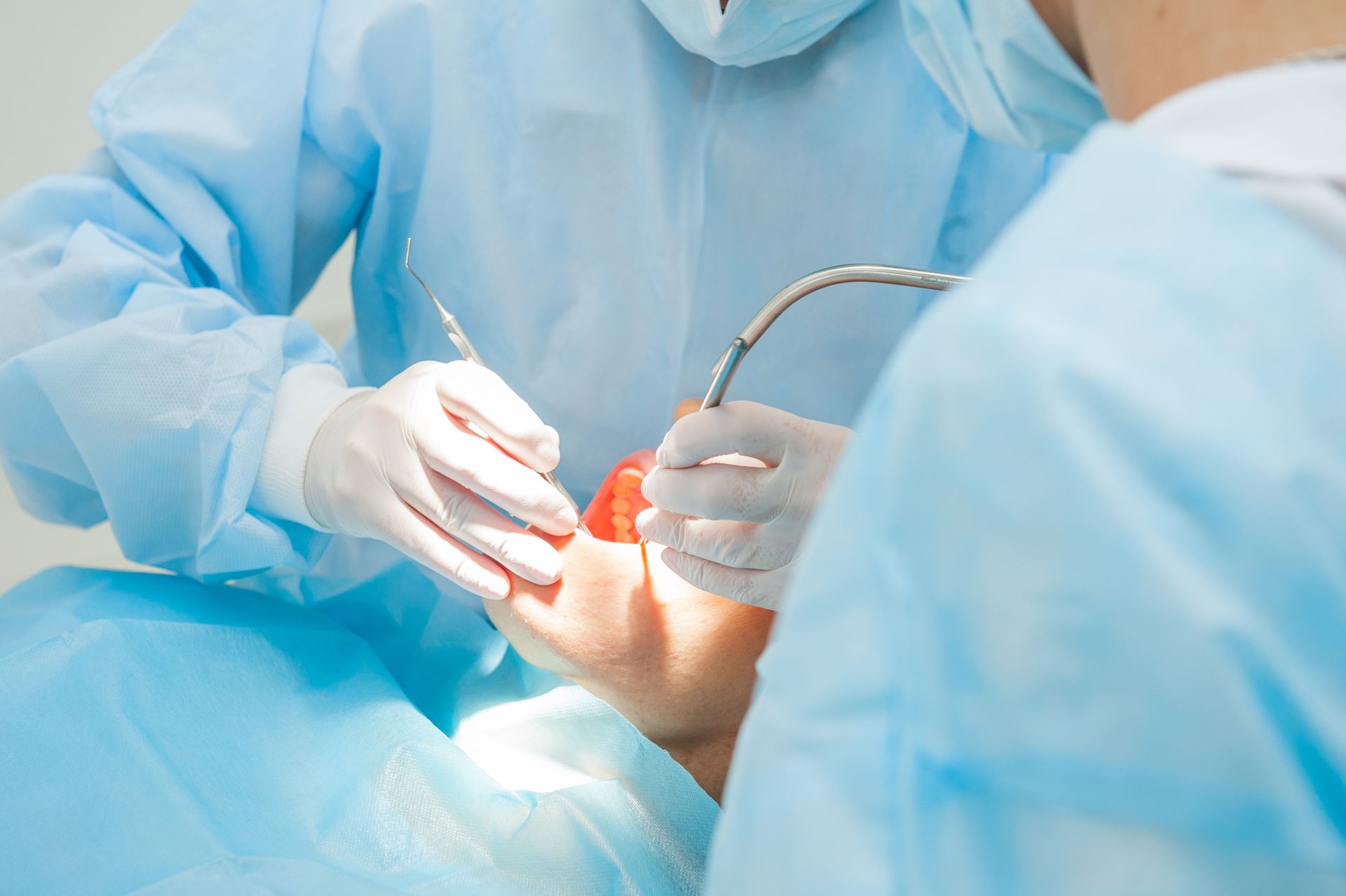
General dentists and oral surgeons both start with a four-year dental school program. After that, their paths look very different. An oral surgeon completes an additional four to six years of hospital-based surgical residency training, covering anesthesia, complex extractions, jaw surgery, facial trauma, and more. That extra training is what makes them qualified to handle cases that go beyond routine dental care.
A surgeon in this specialty is a specialist, much like how a cardiologist specializes within medicine.
Procedures That Typically Require an Oral Surgeon
Some treatments fall clearly within a surgical specialist's scope. General dentists may handle mild cases, but these procedures often call for a specialist:
- Surgical removal of impacted wisdom teeth, especially those that are fully or partially buried in bone.
- Placement of dental implants directly into the jawbone.
- Corrective jaw surgery, also called orthognathic surgery, to address bite problems rooted in skeletal structure.
- Diagnosis and treatment of oral pathology, including cysts and tumors.
- Bone grafting and augmentation to support implant placement.
- Facial trauma reconstruction after accidents or injuries.
- TMJ disorder treatment when nonsurgical approaches have not provided relief.
Each of these procedures requires surgical skill, hospital-level training, and in many cases the ability to administer IV sedation or general anesthesia.
When Does a Dentist Refer You to an Oral Surgeon?
Your general dentist often spots the signs that a referral is needed before you do. A dentist may refer you to a surgical specialist when a tooth is impacted and cannot be safely removed chairside, when an X-ray reveals a cyst or abnormal tissue, when your bite problems stem from jawbone structure rather than tooth position, or when implant placement requires bone grafting first. Dentists and surgical specialists work closely together, and a referral does not mean something is wrong. It simply means your case needs a higher level of surgical care.
A referral to a specialist is a routine part of comprehensive dental treatment.
Is a Dental Surgeon the Same as an Oral Surgeon?
These two terms often refer to the same type of provider. In the United States, "oral surgeon" is shorthand for an oral and maxillofacial surgeon (OMS), a dentist who completed an accredited surgical residency. The term "dental surgeon" can sometimes describe any dentist with a DMD or DDS degree, so context matters. If you are looking for a specialist to perform jaw surgery, implants, or complex extractions, ask specifically for a board-certified oral and maxillofacial surgeon.
Can a General Dentist Pull All Teeth?
A general dentist can perform many routine extractions. However, when a tooth is impacted or positioned at an unusual angle, or when removal requires surgical access to bone, a surgical specialist is typically the more appropriate provider. Patients with medical conditions that increase surgical risk are also often referred to a specialist who can administer IV sedation in a controlled setting.
What Is IV Sedation and Who Can Provide It?
IV sedation is administered directly into the bloodstream and allows patients to remain deeply relaxed and to have little or no memory of the procedure. Administering IV sedation safely requires specific hospital-based training and licensing. Most general dentists are not licensed to provide IV sedation, which is one reason complex procedures are performed in an oral surgery office.
Does Insurance Cover Oral Surgery?
Coverage varies by plan, but many dental and medical insurance plans cover a portion of oral surgery procedures, particularly when they are considered medically necessary. Wisdom tooth removal, jaw surgery, and treatment of pathology may qualify. It is best to contact your insurance provider directly and ask the oral surgery office to help verify your benefits before scheduling.
How Do I Know If I Need an Oral Surgeon in Jackson, MS?
Start with your general dentist. If your dentist identifies an impacted tooth, a jaw alignment issue, an unusual lesion, or the need for implants with bone grafting, they will typically recommend a specialist. Patients across Hinds, Madison, and Rankin counties have access to board-certified oral surgery care right in the Jackson area.
Oral Surgery in Jackson, MS
Patients in Jackson, MS, have access to specialized oral surgery care without traveling to a larger metro area. The Jackson medical corridor near St. Dominic Medical Offices and Mississippi Baptist Medical Center means that patients can receive hospital-affiliated surgical care close to home. For residents in communities like Brandon, Flowood, Ridgeland, and Madison, a board-certified oral surgeon in Jackson is often the most convenient specialist option in central Mississippi.
Oral surgery care in Jackson, MS, may include everything from wisdom teeth removal to corrective jaw surgery.
Connect With a Board-Certified Oral Surgeon in Jackson, MS
Central Mississippi Oral & Maxillofacial Surgery, led by Dr. Kyle T. Hunt, DMD, provides board-certified oral and maxillofacial surgery care at 971 Lakeland Drive, Suite 952, Jackson, MS. Dr. Hunt is a diplomate of the American Board of Oral and Maxillofacial Surgery and a fellow of the American Association of Oral and Maxillofacial Surgeons, with over a decade of service to the Jackson community. The practice serves patients Monday through Friday, 7:30 AM to 4:00 PM, and may be able to accommodate same-day visits for urgent cases.
To learn more about available treatments, visit the oral surgery services page. When you are ready to schedule, contact the office or call (601) 981-3111 to request a consultation.